Why Your Meta Ads Cost Per Lead Is Rising (And It's Not The Algorithm)

Key Takeaways
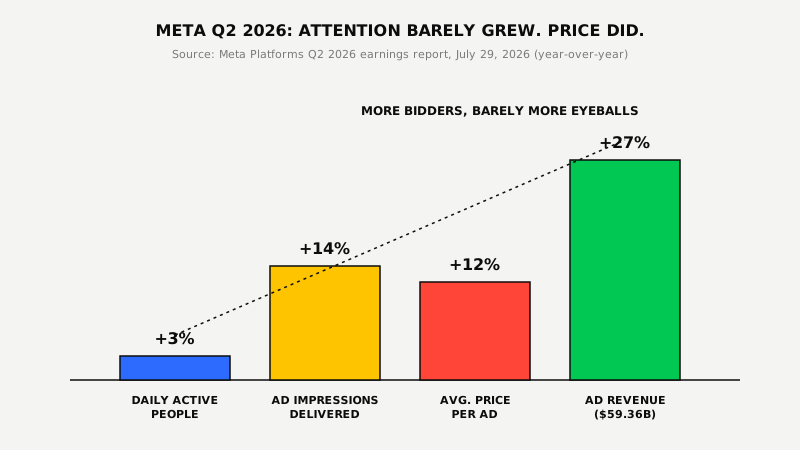
- Meta ad prices are rising because advertiser demand is outpacing attention. Meta's own Q2 2026 earnings show average price per ad up 12% year over year while Family daily active people grew just 3%.
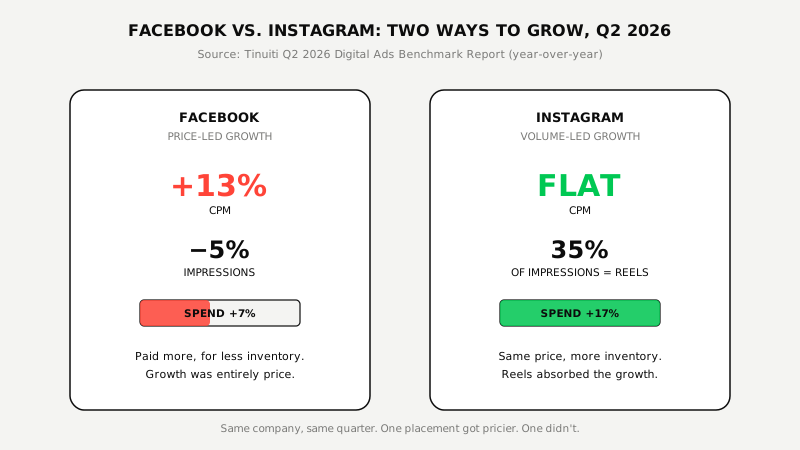
- It's not one algorithm-wide shift. Tinuiti's Q2 2026 benchmark data shows Facebook's growth was entirely price-driven, CPM up 13% while impressions fell 5%, while Instagram grew on flat CPMs by expanding Reels inventory to 35% of impressions.
- Rising CPMs don't automatically mean rising CPL. One GoViral client cut Meta cost per lead from $170.53 to $90.77, a 50% drop, in the same rising-cost environment by fixing creative and conversion signal quality, not by fighting the auction.
- Accounts with climbing CPL are usually paying the auction tax twice: bidding into a pricier auction with the same underperforming creative and incomplete conversion signals that were already dragging results down before prices rose.
Remember When Your Neighborhood Got "Discovered" And Rent Doubled?
Same apartment. Same landlord. Same square footage. Rent went from $1,400 to $2,600 not because the building changed, but because 40 more people suddenly wanted to live there. Nobody called the landlord and said the building was broken. Everybody understood it instantly: more demand, same supply, higher price.
That's what's happening in the Meta ad auction right now. Nothing in the algorithm woke up one morning and decided to charge you more. More advertisers showed up wanting the same slice of attention, and price is just what happens when demand climbs faster than supply.
Blaming "the algorithm" for a rising cost per lead is like blaming the building for the rent. It feels satisfying. It doesn't fix anything.
What's Actually Driving The Price Up
Meta's own Q2 2026 earnings, reported July 29, 2026, answer this plainly. Average price per ad rose 12% year over year. Ad impressions delivered across Meta's properties climbed 14%, more inventory being sold. But Family daily active people, the actual audience on the other end of that inventory, grew just 3%. Ad revenue was up 27% to $59.36 billion for the quarter.
Translate that: advertiser dollars are growing far faster than the audience they're chasing. More ad slots, barely more people to fill them with attention, and a lot more money bidding for both. When the number of bidders grows faster than the number of eyeballs, the price of each eyeball goes up. That's an auction doing exactly what auctions do. It isn't an algorithm getting worse at its job.
Facebook And Instagram Aren't Getting More Expensive The Same Way
Rising Meta costs aren't uniform, and that gap is where the opportunity lives. Tinuiti's Q2 2026 Digital Ads Benchmark Report found Facebook's growth was entirely price-led: CPM rose 13% while impressions actually fell 5%. Businesses paid more for less inventory, full stop.
Instagram told a different story. Spend rose 17% on flat CPMs, growth driven by expanding volume rather than rising price, with Reels now accounting for 35% of all Instagram ad impressions. Same company, same quarter. One placement got more expensive because inventory shrank. The other grew because inventory expanded.
If your media plan doesn't know the difference between the two, you're bidding blind into whichever auction happens to be more expensive that week.
The Auction Tax You're Paying Twice
An account with mediocre creative and shaky conversion tracking was already overpaying for leads before CPMs went up. Add a more competitive auction on top, and the same weak inputs get punished twice: once by a worse click-through rate on tired creative, and again by optimizing toward conversions the pixel never actually saw. Rising CPM is the tax everyone pays. Rising CPL beyond that is the tax you're choosing to keep paying.
What Smart Advertisers Are Doing About Rising CPL
The accounts holding CPL steady, or cutting it, right now aren't fighting the auction. They're fixing what actually determines efficiency inside it: a real weekly creative testing pipeline instead of the same three ads that have been running since spring (the exact system we broke down in our creative strategy piece), and conversion tracking rebuilt around browser pixel plus server-side signal so Meta isn't optimizing toward incomplete data (covered in detail in what actually changed hiring a Meta agency in 2026).
One GoViral client proved what that looks like in practice. In a Meta account where costs were rising across the board, we rebuilt the creative strategy and tightened conversion signal quality. Cost per lead dropped from $170.53 to $90.77, a 50% reduction, while click-through rate more than doubled from 0.66% to 1.36% and lead volume climbed from 36 to 137. The auction got more expensive around us. The account got cheaper anyway.
Is your rising Meta CPL the auction, or your account? We'll show you free.
See The $1,000 Meta Growth Proof Program™ ↗